Printable Mental Health Stickers Designs: A Designer's Real-World Review
As an embroidery designer who has spent years turning digital concepts into tangible, stitched masterpieces, I approach every new asset with a mix of excitement and skepticism. When Printable Mental Health Stickers Designs landed on my desk, I didn't just see a bundle of graphics; I saw potential for heartfelt products that could resonate deeply with customers looking for comfort and motivation. However, the leap from a screen to a sewing machine is where the real work begins. This review isn't about marketing fluff; it is a practical breakdown of how this design performs when subjected to the rigors of real-world embroidery projects.
The First Stitch: Visual Impact and Mood
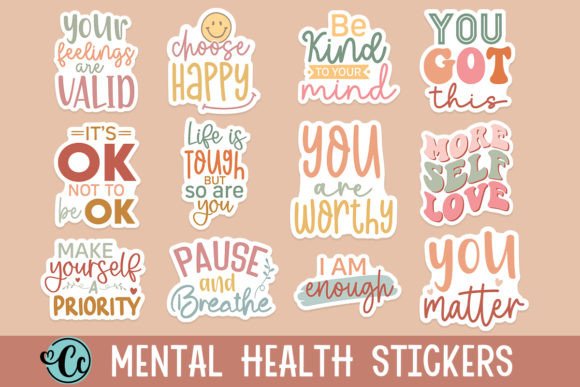
The initial impression of Printable Mental Health Stickers Designs is one of gentle warmth. Unlike many bold, aggressive graphic styles often found in commercial assets, this collection leans into softness and clarity. The shapes are distinct, and the layout suggests a sticker aesthetic that translates surprisingly well into thread. For an embroidery file, the balance between detail and simplicity is crucial. If a design is too intricate, the stitching becomes muddy; if it is too sparse, it lacks character. This design strikes a compelling middle ground, offering enough visual personality to stand out on a tote bag or a sweatshirt without demanding impossible precision from the needle.
The theme of mental health and positivity naturally invites a specific kind of emotional connection. When you stitch these motifs onto fabric, they cease to be mere images and become wearable affirmations. The visual personality feels approachable and safe, making it ideal for products intended to support someone during difficult times. Whether used as a standalone motif or part of a larger series, the design commands attention through its clean lines and thoughtful composition.
From Screen to Fabric: Real-Life Application Scenarios
To truly understand the utility of Printable Mental Health Stickers Designs, we must look at how it behaves in actual production environments. Let's imagine a scenario where I am preparing a custom order for a local boutique client who specializes in self-care kits. They need embroidered patches to attach to canvas totes and aprons sold alongside their wellness products.
In this context, the design shines. The clean edges of the sticker-style graphics translate beautifully into satin stitches, creating a polished finish that elevates the perceived value of the tote bag. I envision placing a small version of the design on the pocket of a chef's apron for a kitchen towel line, or perhaps centering a larger iteration on the chest of a heavy cotton sweatshirt for a "Mental Health Matters" campaign. The versatility here is significant; it works equally well as a decorative accent on a baby onesie or as the focal point of a holiday gift set.
For Etsy sellers and craft business owners, this design offers a ready-made solution for personalized gifts. Imagine a customer ordering a custom pillow cover with their favorite affirmation stitched in thread. The design provides the perfect framework to build such a product without requiring hours of digitizing from scratch. It bridges the gap between digital downloads and physical goods, allowing creators to offer high-quality handmade items quickly.
Navigating Technical Challenges and Limitations
While the artistic merit is clear, a professional designer must also consider the technical constraints. Not every surface is suitable for every design. Printable Mental Health Stickers Designs contains elements that require careful consideration regarding hoop size and fabric texture.
If you plan to use this on curved surfaces like baseball caps or fitted hats, you will need to exercise caution. The curvature can distort the geometry of the design, potentially making lettering or fine details harder to read. Similarly, while the design looks crisp on paper, dense stitch areas might struggle on thin or stretchy fabrics like lightweight jersey or silk blends. Without proper stabilizer, the tension could cause puckering, ruining the clean sticker aesthetic.
Dark fabrics present another hurdle. While possible, the contrast ratio is vital. If the thread colors chosen do not pop against a navy or black background, the design loses its impact. In these cases, testing on scrap fabric is non-negotiable. You must ensure that the running stitches and fill stitches maintain their integrity and do not bleed into one another, which can happen if the stitch density is too high for the fabric weight.
Where to Use With Caution
- Small Hoop Sizes: Ensure the design fits within your smallest hoop without cutting off critical details.
- Textured Fabrics: Rough materials like bouclé can hide fine details, so simplify the design if necessary.
- Detailed Corners: Tiny points may require trimming or rounding in the digitization process to prevent fraying.
- Frequent Washing Items: For items like kitchen towels or baby clothes, verify that the stitch density is robust enough to withstand repeated laundering without unraveling.
Impact on Product Value and Brand Consistency
The quality of an embroidery project directly influences customer trust and brand perception. A sloppy stitch job can undermine even the best message, but a well-executed Printable Mental Health Stickers Designs project signals professionalism. When a buyer receives a handmade product where the threads are tight, the colors are vibrant, and the placement is precise, they feel confident in the craftsmanship.
This design fosters a sense of community and care. For small shop owners, using a cohesive design language across different products—such as matching a tote bag, a cap, and a patch—creates a recognizable brand identity. The positive messaging inherent in the design encourages repeat purchases, as customers often return for items that align with their values. Furthermore, the ability to create digital mockups with this design allows sellers to showcase their products effectively before committing to production, saving time and resources.
Practical Notes for the Embroidery Designer
Before you load this design into your machine for a commercial run, there are several steps you must take to ensure success. First and foremost, always test the design on scrap fabric that matches your final material. Check the thread color contrast under different lighting conditions to ensure the message remains legible.
Review the stitch density carefully. If the design feels too heavy for the intended garment, you may need to adjust the settings or choose a lighter stabilizer. Confirm the hoop size requirements to avoid any cropping issues during the stitching process. Inspect small details closely; sometimes, what looks good on a screen needs slight modification when converted to thread.
It is also wise to test the design in black and white mockups to see how the shapes hold up without the distraction of color. Compare how the design appears on both light and dark backgrounds to determine the most versatile thread palette. Finally, check the licensing terms explicitly. Ensure that you have the right to sell finished items made from these designs, especially if you are planning to list them on platforms like Etsy or use them in commercial embroidery projects. Do not assume the license covers all uses; clarity here protects your business.
In conclusion, Printable Mental Health Stickers Designs is a valuable asset for any creative entrepreneur looking to expand their catalog with meaningful, handcrafted goods. Its blend of inspirational themes and practical layout makes it a strong candidate for apparel, home decor, and personalized gifts. By approaching the digitization and stitching process with care and attention to detail, you can transform these digital graphics into cherished physical treasures that bring joy and support to those who wear or display them.